Corn Street Rooftops — Bristol’s Best-Kept Secret Viewpoints & Cityscape Art
Bristol local guide · Corn Street is in Bristol city centre. · Updated May 2026
Stand on one of the Corn Street rooftops at dusk, and you hear Bristol before you see it – the distant rumble of the Portway, St Nicholas’ bells rolling across the city, and the shriek of a seagull cutting through the air. It is one of those moments that cannot be photographed perfectly, only experienced. And yet people keep trying, because the view from up here is genuinely worth the effort of finding it.
“The sound of Bristol’s rooftops is specific to this city – the Portway, the bells of St Nicholas, the seagulls. No postcard has ever captured that.”
What is the exact location of the Corn Street rooftops?
The rooftop viewpoints most associated with Corn Street in Bristol city centre sit along the terraces overlooking the heart of the city, a stretch of historic and independent-shop Bristol that shifts mood completely depending on the hour. At street level on a Tuesday evening, the area is loud, social, and busy. Climb one flight and the noise softens. Climb to the roofline and you are looking at a city that most Bristolians have never seen from this angle.
The accessible viewpoints are not formally signposted. You find them by knowing someone, by wandering up a staircase in a flat-share, or by being invited onto a terrace after a Sunday roast. That is what makes the Corn Street Rooftops worth writing about — they are a secret that feels less special once it is loud, so seek them out quietly.
What Can You Actually See From This Secret Bristol Vantage Point?
The view is not clean or curated. That is the point. Looking out from a rooftop toward Corn Street you are reading layers of Bristol history at the same time: Victorian chimney pots in sharp silhouette, street art visible through the gaps between buildings, the Georgian and Baroque facades of Corn Street itself standing in the distance like a reminder that this was once one of England’s most important trading streets.
It is what photographers call “organised chaos”, the kind of scene where every element should clash but somehow doesn’t. The reason so much Bristol rooftop photography originates from this part of the city is because the composition essentially arranges itself.
Why Golden Hour on Corn Street is the Best Time for a Visit
If you are going to be on a Corn Street rooftop at one specific time, make it a golden hour on a clear summer evening – roughly 7:00 to 8:30pm between May and August. When the sun drops behind the Clifton ridge, it catches the limestone faces of the Corn Street buildings and turns them amber. The chimney stacks cast long shadows east across the city. The docks in the distance go still. For about twenty minutes, Bristol looks like a painting.
This is the window that Bristol rooftop photographers chase. Not the expensive rooftop bars with their wide-open horizon and blurred skyline — the modest terraces, the ones with a cider and a view that cost nothing, where the light falls exactly right.
How the Corn Street Skyline Inspires My Bristol Cityscape Art
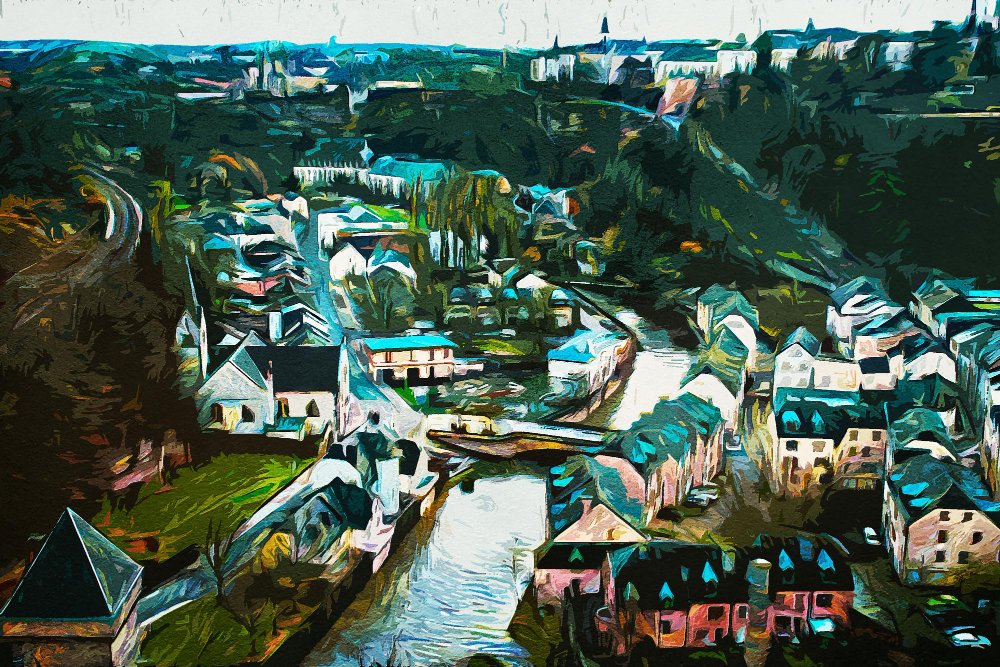
There is a reason Bristol cityscape art has grown in popularity among people who have lived here, visited, or simply passed through. The Corn Street rooftop view – chimney pots, street art glimpsed between alleys, warm stone facades – is the kind of image people want to keep. Not as a memento of a tourist attraction, but as a record of something that felt genuinely theirs.
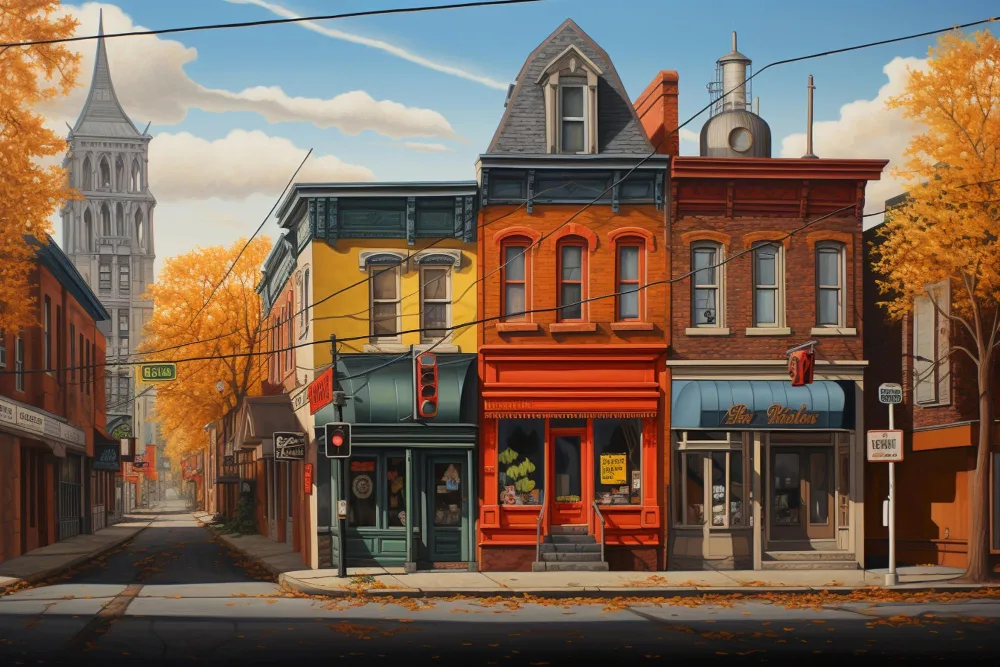
The most effective Bristol rooftop art prints are not the postcard versions. They are the pieces that carry texture – the grain of the stone, the tilt of the chimney, the slight imperfection of a hand-painted canvas. When people ask what to look for, the answer is always the same: find work with grit. The Corn Street view has grit. The art should too.
For prints that capture this specific atmosphere – including rooftop photography prints and hand-finished canvas art of the Bristol skyline – Artisan Gallery Hub produces work rooted in the character of the city rather than its postcard image.
Why the View From Corn Street Feels Different to the Rest of Bristol
Bristol is a city of hills. It changes altitude constantly, and with altitude it changes character—from the waterfront energy of the harbour to the quiet Georgian streets of Clifton to the bohemian density of Stokes Croft. The transition from ground-level noise to the stillness of its roofline is one of the sharpest of these shifts.
The rooftops themselves have not changed much. The city below them has new builds appearing in the docks, murals painted over and replaced, and the independent shops cycling through generations of owners. But the chimney pots remain, and the Corn Street skyline remains, and on a clear evening they look much as they have looked for a hundred and fifty years.
How to Bring the Corn Street Rooftop View Into Your Home
The feeling of standing on one of these rooftops – cold cider, city sprawl, the bells just audible beneath the traffic – does not compress well into a phone photo. The best Bristol cityscape art captures the atmosphere rather than the exact geography: the warmth of the stone, the industrial lines of the chimney pots, and the particular quality of evening light that only appears this far west in England.
If you have been on a Corn Street rooftop and want that feeling on a wall, the advice is the same as it has always been: look for art with angles and grit, not a smooth aerial panorama. The city from up here is textured and imperfect. The art should match.