I want to start with something that doesn’t get said enough in these kinds of articles.
Recovery is boring sometimes. It’s slow. It’s two steps forward, one step back, and a Tuesday afternoon where you feel exactly as stuck as you did six months ago. Anyone who tells you otherwise is probably selling something.
But here’s what I’ve noticed and what a lot of people in Bristol’s creative community have noticed too. There are certain things that help you move, even when movement feels impossible. And one of them is surprisingly simple. You pick up a pencil. You put it on paper. You make a mark.
Nobody’s Asking You to Be Banksy
Bristol is a city that takes its art seriously. You can’t walk through Stokes Croft or along the harbourside without bumping into something. Someone made something raw, something considered, something that clearly came from a real feeling rather than a brief. This city has always had that quality. Art here isn’t decorative. It means something.
But that reputation can actually intimidate people. When you live somewhere with genuine artistic identity, picking up a sketchbook for the first time as an adult feels a bit like learning to swim in the ocean rather than a pool. Everyone around you seems to know already what they’re doing.
Here’s the thing, though: the sketch artists and art therapists working across Bristol, from Bedminster to Clifton, are not looking for the next gallery submission when someone walks through their door. They’re looking at the person. What brought them here? What they’re carrying. And whether a pencil in their hand might help them set a little of it down.
Skill is genuinely not the point. I know that sounds like something people say to be encouraging, but it’s actually true in a clinical sense too. Art therapy reduces cortisol — your stress hormone — in the majority of participants almost immediately. That happens regardless of whether what you drew looks like anything at all.
The Particular Magic of Sketching
There are lots of creative forms. Painting, collage, ceramics, photography. All of them have their place.
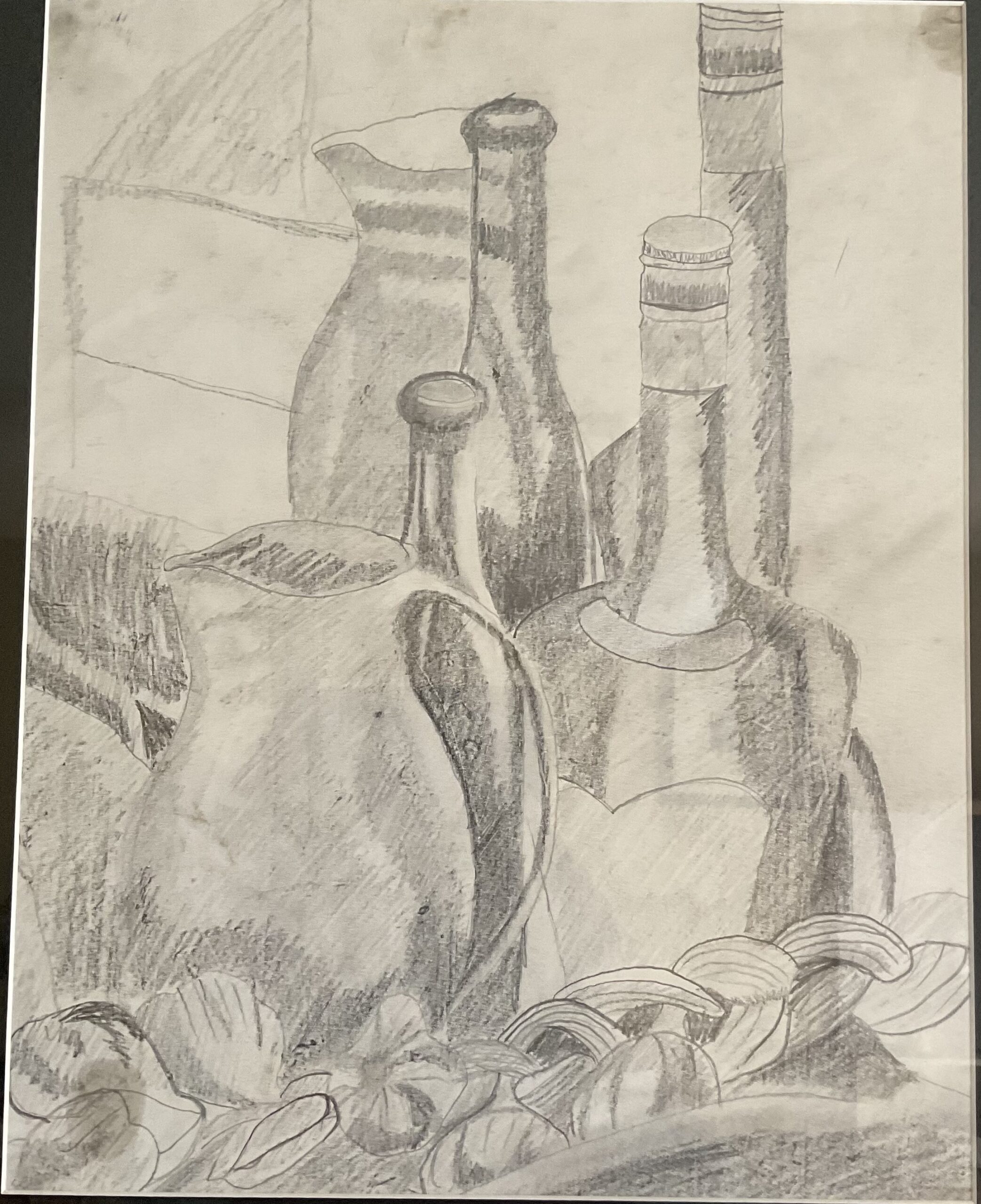
But sketching has something the others don’t, at least at the beginning. It’s quiet. There’s almost no barrier between the thought and the mark. You don’t need to mix anything, wait for anything to dry, or buy anything expensive. A pencil costs almost nothing. A notebook costs almost nothing. And the act of drawing, of actually looking at something long enough to try to recreate it, forces a kind of presence that is genuinely hard to access any other way.
When you’re anxious, your mind is usually somewhere else. Usually in the future, running disaster scenarios on a loop. Sketching pulls you back into the room. You’re looking at the shape of a hand, or a window, or your own face in a mirror, and for those minutes, the loop stops. Not because you solved anything. Just because your attention went somewhere else.
That’s not nothing. For a lot of people in recovery, that small break in the loop is the first proof they get that the loop isn’t permanent.
What Actually Happens Over Time
One session won’t change your life. Let’s be honest about that too.
But something does happen if you keep showing up. Slowly, your sketchbook starts to tell you things. You notice that you drew a lot of closed shapes during a particularly hard month. You notice that when things eased up a bit, your lines got looser. You weren’t consciously doing any of this – it just happened the way a diary reflects your life back at you when you reread it months later.
Bristol’s art therapy practitioners talk about this a lot: helping people navigate their emotional world through creative expression, with the understanding that the relationship and the process matter far more than the product.
That shift from trying to make something good to just making something honest is where the real work happens. And it’s also, strangely, where the best work happens. The drawings people make when they stop trying to impress anyone are usually the most striking ones.
The Self-Portrait Problem
At some point, if you work with a sketch artist or attend an art therapy group, someone will probably suggest you draw yourself.
Your immediate reaction will likely be some version of dread.
That’s normal. Drawing your own face is uncomfortable in a way that’s hard to explain until you’ve tried it. You’re not just looking at features; you’re deciding how to see yourself. What to emphasise. What to soften. Whether you draw the tired lines around your eyes or smooth them out. Whether you draw yourself the way you look or the way you feel.
Creating a self-portrait is a powerful way to explore your own identity and self-perception, and you need nothing more than paper, pens, and pencils to do it.
What tends to happen, over several attempts, is that people gradually get kinder in how they draw themselves. The first portrait is often harsh, with exaggerated flaws and unflattering angles. By the fifth or sixth, something has shifted. Not the face. The gaze. People start drawing themselves the way they’d draw someone they cared about.
Bristol Specifically — Why This City Does This Well
Other cities have art therapy. Other cities have creative recovery programmes. But Bristol has something that makes this work particularly well here, and it’s hard to fully articulate.
Part of it is the city’s long relationship with outsider culture — the artists, the activists, and the people who never quite fit the mainstream but built something extraordinary because of it. There’s less judgement here about what art is supposed to look like or who gets to make it.
The best creative recovery spaces in this city operate on a simple principle the focus is on the person, not the diagnosis. Moving someone from thinking of themselves as a patient toward thinking of themselves as an artist is quietly one of the most transformative things you can do.
Studios, community workshops, individual practitioners – there’s a genuine ecosystem here for people who want to use creativity as part of how they heal. You don’t need a referral for most of it. You just need to show up.
One Last Thing Before You Go
If you’ve been thinking about this for a while about trying sketching, about visiting a studio, about seeing whether any of this might be useful for where you are right now, I’d gently say the thinking about it is usually longer than it needs to be.
You don’t need to be ready. You don’t need the right supplies or the right mood or a clear sense of what you want to express. You just need a blank page and something to make a mark with.
The rest tends to find its way.
At Artisanal Gallery Hub, we think art belongs to everyone, not just people with talent or training, but also people with something they need to work through. If you’re in Bristol and you’re curious, explore what’s available. There are sketch artists and creative practitioners here who are very good at meeting people exactly where they are.