There’s something strange about looking at a drawing of your own life.
Not a photograph. Not a painting someone did from memory. A drawing — where someone sat down, listened to you talk, and then put your story onto paper with their hands. It feels different. More honest, somehow. Like the things you’d struggle to say out loud suddenly have a shape.
That’s what autobiographical drawing is. And Bristol, of all places, is exactly where you’d expect to find it thriving.
This city has always had a complicated relationship with storytelling. Walk down Stokes Croft, and the walls are covered in it. Street art isn’t just decoration — it’s people saying things they couldn’t fit into polite conversation. Bristol has always made room for that. For the personal. For the raw. For the kind of creative work that actually means something to the person who made it.
An autobiographical drawing maker works in that same spirit. They take your story — your actual life, your memories, the people you’ve lost, and the moments that changed everything — and they find a way to draw it. Not illustrate it like a children’s book. Draw it the way a visual diary would look if it were made by someone who really knew what they were doing.
It might be a single image that captures a chapter of your life. It might be a series of drawings that move through time. It might be abstract — objects that meant something, places, faces half-remembered. Whatever form it takes, the result is yours in a way that almost nothing else can be.
People come to this kind of work for all sorts of reasons.
Some want something to mark a big moment — a life change, a loss, the end of something or the beginning of something else. Some are processing things they haven’t found words for yet. Some simply want a record of their life that isn’t a photo on a phone that might disappear when the cloud storage runs out.
And some people just feel, somewhere quiet in the back of their mind, that their story deserves to exist somewhere visible. That feeling is worth paying attention to.
Bristol has long been home to artists who take personal history seriously as subject matter. The city’s creative community has a real tradition of work that’s rooted in lived experience rather than abstraction for abstraction’s sake. Finding an autobiographical drawing maker here isn’t just a transaction — it’s a collaboration. You sit with someone, you talk, and over time something emerges from those conversations that neither of you could have made alone.
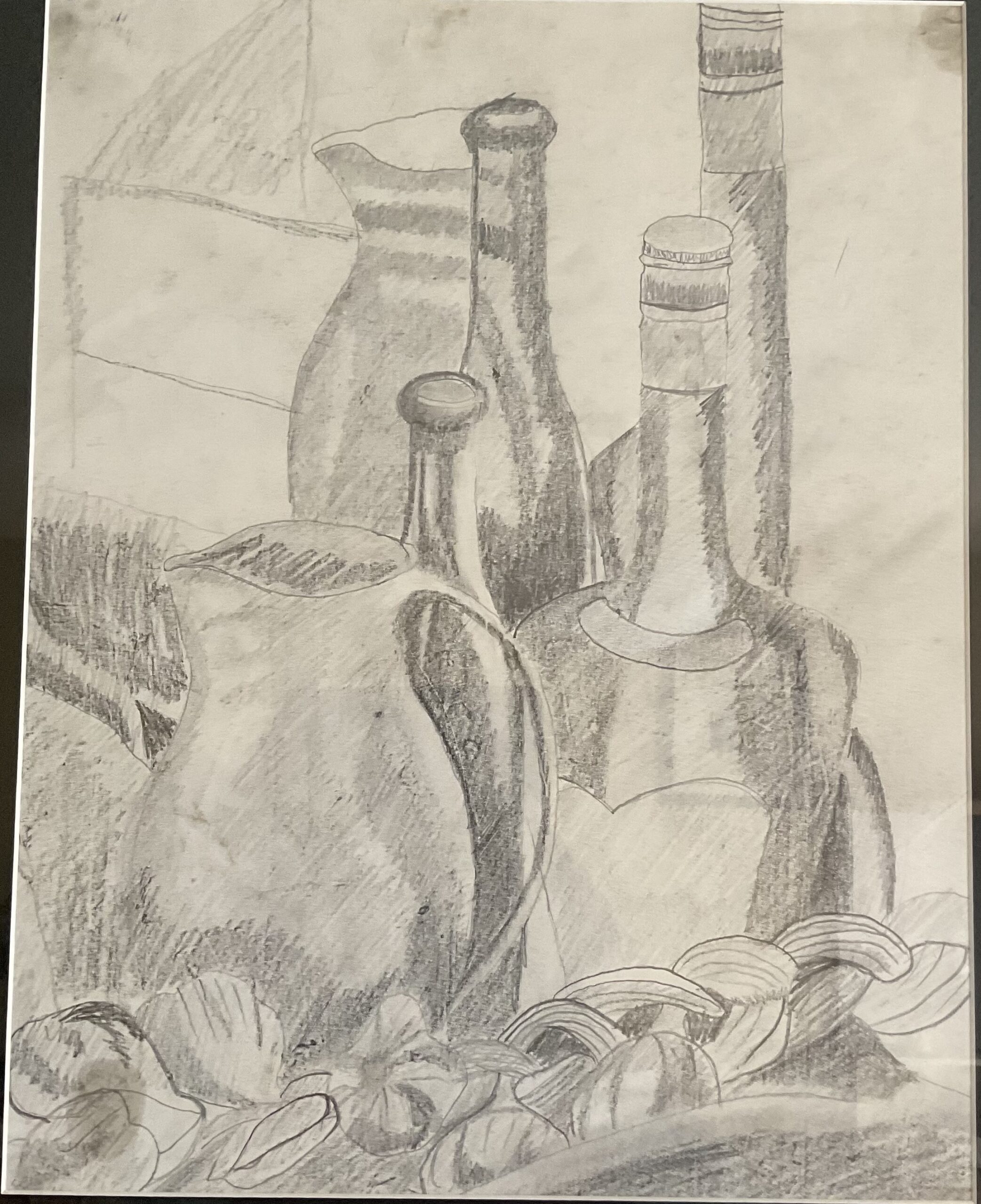
What actually happens in the process varies from artist to artist. Some work from photographs; you bring them. Some work entirely from conversation, sketching as you talk, building up an image from the fragments you give them. Some ask you to bring objects – the things sitting on your shelf that you’ve moved from house to house for twenty years without ever quite being able to throw away.
Those objects matter, by the way. An autobiographical drawing doesn’t just capture faces and places. It captures the texture of a life. The chipped mug. The handwriting on an old letter. The particular way a street looked at a specific time of year when something important happened. A good drawing maker notices those things and puts them in.
The result is something you can hold. Hang on a wall. Pass on.
There’s a reason people who commission this kind of work often describe it as one of the best decisions they’ve made. Not because it’s particularly practical. But because it answers a need that most people carry around for years without ever naming it — the need to feel like their story has been witnessed. Written down. Made real in some form that lasts longer than memory.
If you’re in Bristol and you’ve been quietly thinking about this — maybe for yourself, maybe as a gift for someone whose story deserves to be drawn — it’s worth looking into properly.
The best autobiographical drawing makers here aren’t hard to find if you know where to look. They work quietly, mostly through word of mouth, because the work speaks for itself. And when you see a finished piece — when you look at a drawing of your own life and feel that strange, specific recognition — you’ll understand immediately why people keep coming back to it.