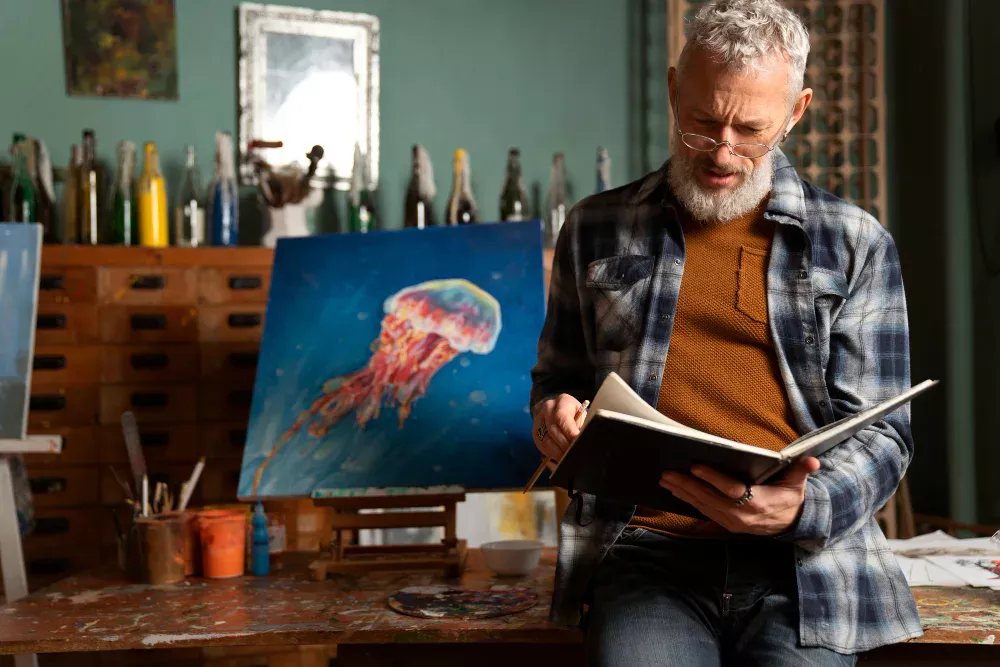
By Peter Lyons | Artist & Art Therapist, BA/MA University of the West of England | Artisanal Gallery Hub | Bristol Last updated: May 2026
I live and work in Totterdown – a short walk from Bedminster and the streets that run through South Bristol’s most creatively alive neighbourhood.
Phillip Street is in that same pocket of the city
For those who value art, recovery and the enduring power of creative expression, this corner of Bristol has a meaning that most people pass by without realising.
This is where John Lennon came to Bristol. Not in person but in the only way that really counts for an artist. In the work itself.
When John Lennon Arrived on North Street
Upfest, Europe’s biggest street art festival, came to the streets of Bedminster and Southville in July 2017 with more than 450 artists from 30 countries.
That year’s highlight of the festival was extraordinary
A kaleidoscopic portrait of John Lennon was painted by Brazilian artist Eduardo Kobra on the wall of the Tobacco Factory on North Street. Kobra spent several days in the Aldi car park on North Street, with a scissor lift, cherry picker, and a growing number of onlookers watching every brush stroke.
The completed mural was the most photographed artwork at Upfest 2017. One of the most discussed public art pieces in Bristol in years.
That wall is within walking distance of Phillip Street. So is my studio.
“When I first stood in front of that mural, what struck me most was not the scale — though it was jaw-dropping — but the choice of subject.”
Of all the figures Kobra could have selected, he selected Lennon. A man who lived his entire artistic life in an autobiographical manner. A man who turned personal pain into public art.
This is not a coincidence; this is a statement.
What Lennon Understood About Honest Art
I have been in recovery for years and painting is my language, so Lennon’s creative approach is very instructive to me.
He never divorced art from life.
Songs such as Mother, Working Class Hero, and God are not performances. They are confessions. The kind of work that only comes from someone willing to be completely exposed on the canvas or on record.
This is the basis of all that I do in my own practice and in the art therapy sessions that I offer in Bristol.
The best healing work is never the most finished work. It is the most truthful work.
Lennon knew this. The songs he was most proud of were the ones that scared him to release, he said, because they showed too much.
What Kobra’s technique brings to this:
The geometric fragmentation of the face into angular planes of colour is not only a visual style; it is also a method of working developed by Kobra. It is a means of demonstrating that identity is not singular.
A person consists of several layers. Many versions. Many contradictions.
For Lennon, it was literally true
- The Liverpool working-class boy who became a global icon.
- The peace activist who was also notoriously difficult
- The man who sang love and was unable to give it
- That complexity deserves a wall. And in Bedminster, it got one.
Why Phillip Street is the right place for this legacy.
One might think that Lennon’s legacy is just for Liverpool, in the shiny world of Beatles tourism.
However, the streets around Phillip Street have a different story to tell.
Bedminster has long been a resilient area of South Bristol. A dock and manufacturing town that, like Liverpool, has rejuvenated itself through culture when traditional industry declined.
The independent venues, community arts spaces and the annual arrival of Upfest are not coincidental. They are the fruits of a community that decided to be creative.
From Liverpool to Bedminster: How Urban Environments Shape Street Art
Like post-industrial Bedminster, post-war Liverpool was a place where people had every reason to be cynical — and instead made something. The music, the wit, the lack of respectability. All of it came from that environment.
“I can feel that same energy when I walk down North Street past the Tobacco Factory wall, or when I walk down Phillip Street on a weekday morning.”
This is why public art, such as the Kobra mural, is important. It does not seek permission to be. It does not wait for a gallery to validate it.
It’s displayed on a wall where regular people can see it when they’re shopping — and it alters the emotional climate of the street.
The Thread That Connects Lennon to Recovery
In 2017, the same year Kobra painted Lennon on North Street, the Upfest festival was running a fundraising partnership with the National Association for Children of Alcoholics.
That’s something I’ve never forgotten.
Lennon’s narrative is inextricably linked to the pain of abandonment and loss. His father left. His mother died when he was seventeen. He dealt with that trauma by making art, relentlessly, honestly, for the rest of his life.
My own path has been similar
A therapeutic community of 10 years. A BA and MA from the University of the West of England. The practice of helping others to realize that painting, rather than talking or analysing, is one of the most direct ways to understand oneself, is now entrenched.
Lennon’s presence in Bedminster, via Kobra’s mural and via the wider culture of creative recovery that permeates this part of Bristol, is a confirmation of something I have always believed:
Art and healing are not two distinct entities. They are the same process, but they are done in different ways.
Come and See It for Yourself
If you are in Bristol and looking for a neighbourhood that creates this kind of art, then Bedminster and the surrounding streets of Phillip Street are worth your time.
In particular, North Street is worth the walk:
Small, independent businesses and community venues on each block
Murals at every turn, many from previous Upfest festivals
The Tobacco Factory is a cultural center and the home of Kobra’s Lennon.
The mural is still one of the most important public artworks in South Bristol. One of the most sincere portrayals of an artist who never gave up on the idea that creativity is the most significant thing one can do with their life.
If you are interested in learning about art as a personal expression or recovery, I welcome you to explore the work and workshops at Artisanal Gallery Hub. You can also view my gallery or read more about my own journey.
Author BIO – Bristol artist and art therapist Peter Lyons (BA, MA, University of the West of England) creates raw, autobiographical paintings centred on recovery and emotional healing. From his space in Totterdown, Bristol, he runs individual and group art therapy sessions dedicated to self-expression.